

Vibecoding has been gaining traction in the technology market as a new way to build software. The logic is simple: instead of writing every line of code manually, a person describes in natural language what they want to build and the tool generates the application automatically. This model has emerged from advances in code generation assisted by intelligent systems and is seen as a way to lower technical barriers in software construction.
In practice, vibecoding allows people without deep technical training to create software or prototypes from high-level instructions. Creative intent takes center stage while technology handles execution. This movement has accelerated prototyping and experimentation, shortening the time between a perceived problem and the first functional version of a solution. Companies like Lovable have helped popularize this concept by arguing that software creation can become more accessible and faster. For early stages of concept testing, this model performs well.
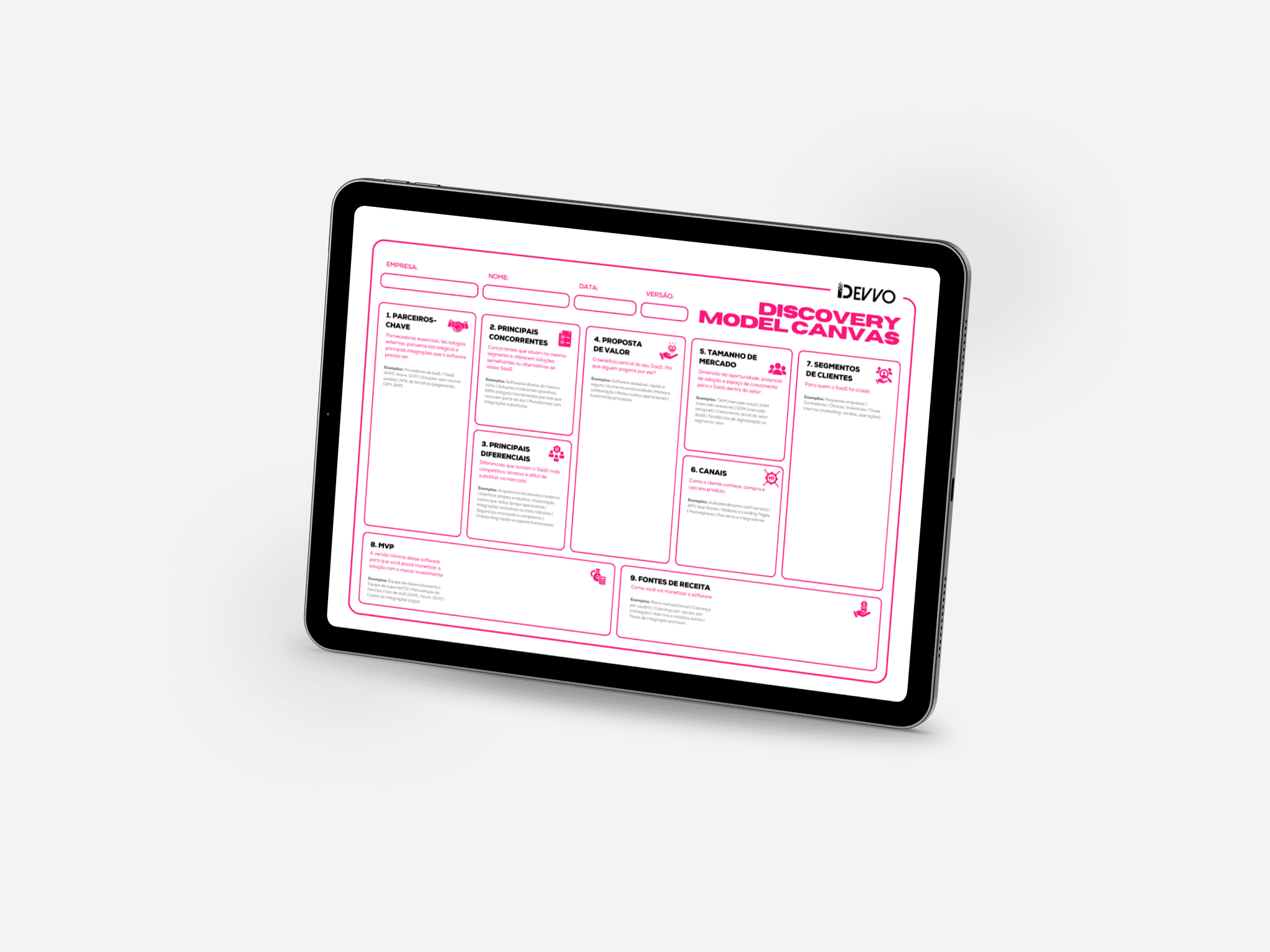
However, as the market matures, it becomes clear that speed is not synonymous with quality, sustainability, or success. Building quickly does not mean creating something ready to solve a real problem, evolve safely, or operate at scale. Many solutions fail not because of immediate technical limitations, but due to a lack of understanding of the context, the user and the market in which they operate. This is where diagnosis comes in. This phase focuses on analysis, immersion and structuring problems and operations. It helps companies that have a pain point or an opportunity but do not yet know where to start. In diagnosis, the company:
Understands the problem and context → Maps the user and their needs → Defines requirements and flows → Creates a navigable prototype → Identifies investments, risks and priorities
During this process, technological tools can support various activities, such as generating initial hypotheses, creating quick screen versions, translating requirements into drafts or suggesting navigation flows. This support helps gain speed and explore alternatives more agilely. But there is a part of diagnosis that cannot be automated: critical analysis.
Interpret market nuances → Understand users' real pains → Assess business viability → Define priorities → Choose technological paths → Plan the structure to scale. These points require experience, contextual reading and responsibility for decisions that will sustain the solution in the long term. They are choices that impact costs, scalability, security and evolution capacity. Technology speeds up execution, but it does not replace strategic judgment nor assume the consequences of the decisions made. In practice, vibecoding makes the construction process faster. Diagnosis answers what should be built, why it should be built and which result needs to move. It is this combination of speed and deep understanding that increases the chances of a solution starting with more safety, purpose and consistency.